9th May 2026
I am so delighted to share a paper, “Beyond Words: Inclusion Through Arts-Rich Experiences,” published in the European Early Childhood Education Research Journal written with the wonderful Dr Olivia Karaolis. You can read the paper here: https://www.tandfonline.com/doi/full/10.1080/1350293X.2026.2653671#abstract
This paper explores how children’s participation can be understood beyond spoken language. Children have a right to be heard, yet in early childhood settings, “voice” is often narrowly understood as verbal expression. This can unintentionally marginalise children who communicate, participate and connect in diverse ways, including children who experience disability.
Drawing on an inclusive arts-based project, the paper explores how puppetry can create rich opportunities for children to express themselves through gesture, touch, movement, affect, material interaction, play and relational presence. Using portraiture methodology and Lundy’s model of participation, addressing space, voice, audience and influence, we show how children’s ideas shaped routines, curriculum and relationships.
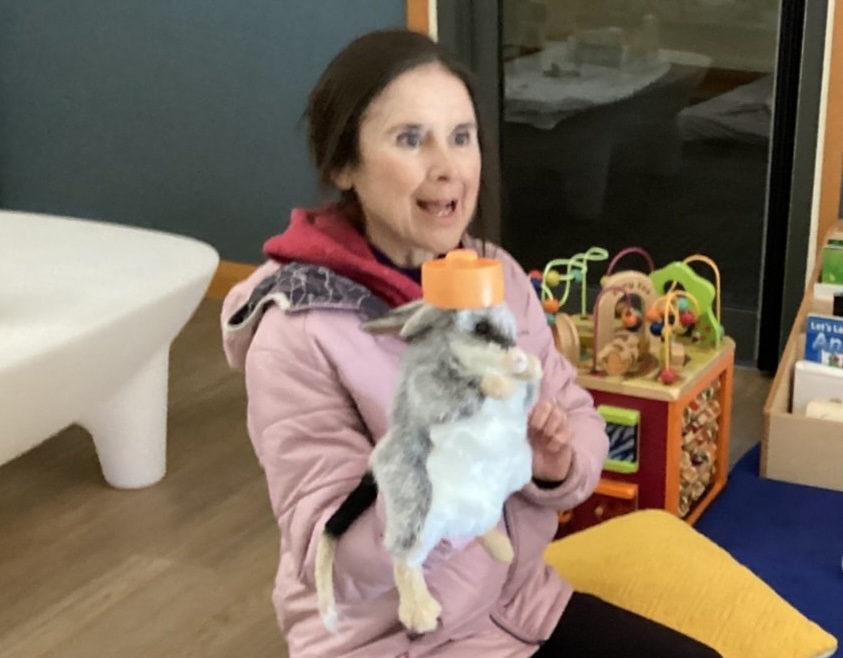
At the heart of the paper is Joy, a Bilby puppet who became part of the research and pedagogical process. Through Joy, children shared what joy meant to them: happiness, love, family, friendship, gratitude and being together. Just as importantly, children communicated through smiles, laughter, gentle touch, curiosity, care and imaginative play.
The paper explores ways in which listening to children requires more than hearing words. It requires us, as educators and researchers, to notice, value and respond to children’s many ways of communicating. Participation is not a single event or consultation activity, but an ongoing, relational and ethical process.
We hope this paper contributes to conversations about children’s communication rights, inclusive early childhood practice, anti-tokenistic participation and the role of the arts in creating spaces where every child is recognised as a capable communicator.
Ultimately, the paper affirms that joy is not an optional extra in early childhood education. Joy can be a marker of agency, trust, belonging and meaningful participation. When we listen beyond words, we create richer possibilities for inclusion, dignity and connection.
Image description: Dr Olivia Karaolis with puppet, Joy, who is a Bilby. Olivia and Joy are sitting on the floor in an early childhood centre engaging with children (the children are not in the photo).
#Children’sRights #LundyModel #Children’sVoice #ArtsEducation #Inclusion
 Inside Inclusion: A diary of working toward inclusion
Leave a comment